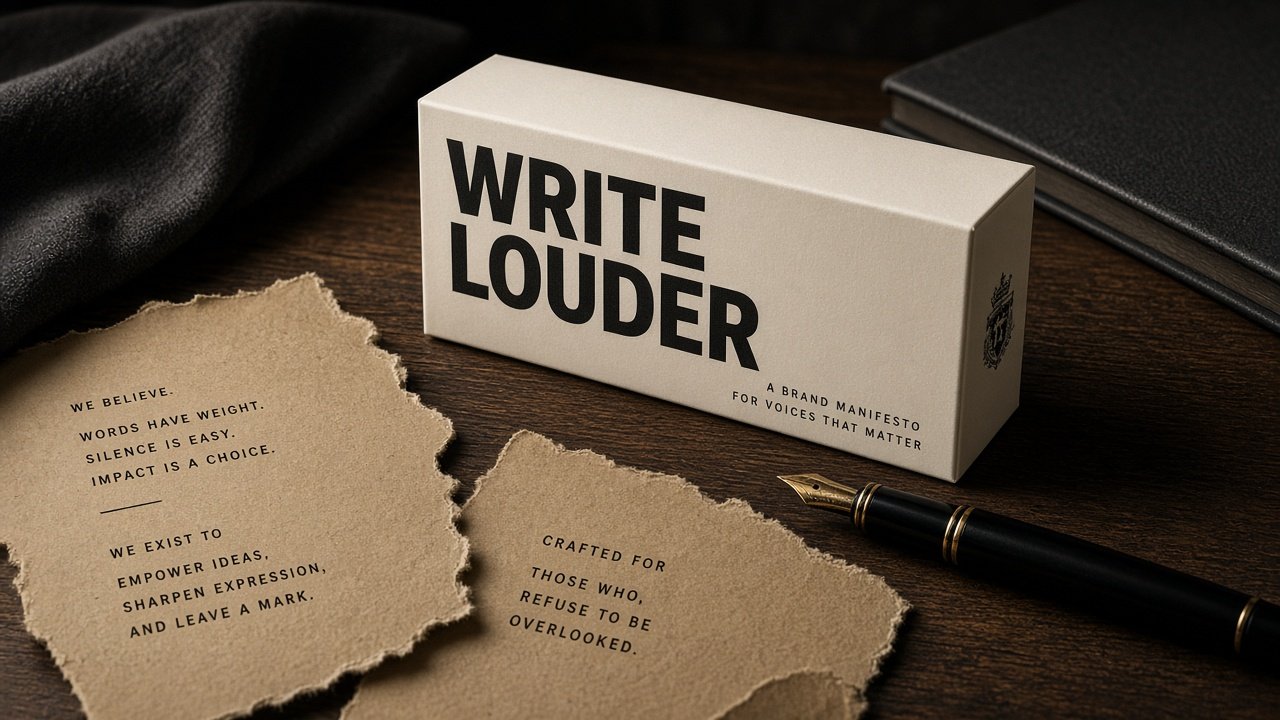
Most briefs ask for more: more benefit, more proof, more adjectives that promise the moon and a free tote bag. The work that lasts usually asks for less — not because the idea is thin, but because silence is a structural material.
In a screenplay, silence is stage direction you can feel. In brand copy, silence is the white space that tells the reader you trust them. Both are crafts of omission.
Silence is not the absence of writing. It is writing that refuses to over-explain.
What silence does on the page
It creates pressure. A character who doesn’t answer is doing something. A homepage that doesn’t list twelve features is choosing a point of view. Readers lean in when you stop filling every gap with insurance language.
It creates rhythm. Short sentence. Then a longer one that earns its length because the short one made room. Marketing that only ever shouts at one volume becomes noise — even when the product is good.
Three practical moves
- Cut the throat-clearing. If the first paragraph apologizes for existing, delete it.
- Let one image carry the paragraph. One concrete detail beats three abstractions.
- End early. The last line should feel like a door left slightly open, not a TED Talk bow.
Where brands get it wrong
They fear misunderstanding, so they explain the joke. They fear legal, so they smother the claim. They fear silence, so they decorate. The result is copy that sounds expensive and says nothing.
Say the true thing once. Then stop before you negotiate it away.
A closing exercise
Take your strongest paragraph. Remove every word that exists only to soothe a stakeholder. Read what’s left out loud. If it still holds, you’ve found the sentence. If it collapses, you didn’t have a sentence — you had a committee.